
Contributing
On this page
Use the shared writing guide and review and privacy rules. Keep explanations short and use diagrams where they clarify a connection.
You can contribute code, documentation, tests, accessibility fixes, diagnostics or verified build reports. Browser, simulator, SDK host tests and fixture diagnostics need no hardware. Start with the ready queue.
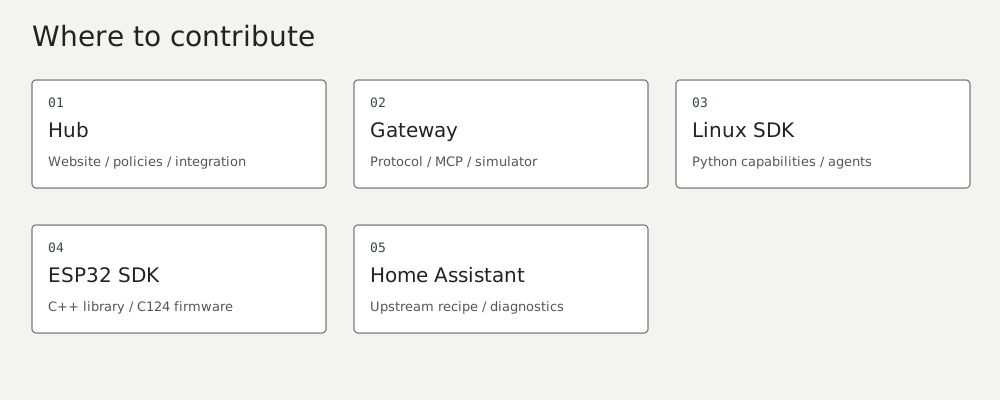
Choose the repository that owns the change. Use the repository map and each component README. The responsibility diagram shows the same division.
Discuss protocol/schema changes, cross-repository interfaces and substantial features in an issue first. A typo fix needs no issue ceremony. Reproduce a bug before changing code; state the expected behavior, observed result and evidence level. GitHub Issues are authoritative after the initial migration. The local planning ledgers preserve pre-publication history; the website consumes a timestamped GitHub snapshot. The separate GitHub Project board remains pending.
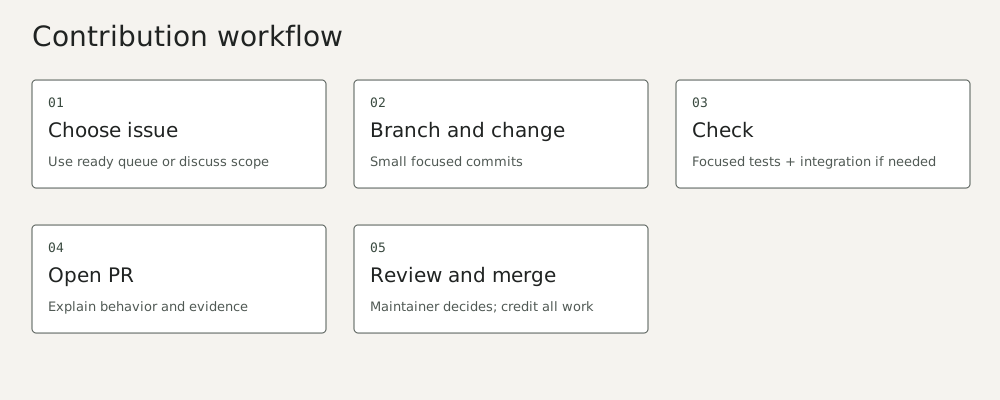
Fork the repository under your account, clone your fork and branch from main:
git clone https://github.com/YOUR_ACCOUNT/grok-gadgets.git
cd grok-gadgets
git switch -c docs/your-focused-change
uv venv .venv --python 3.13
uv pip install --python .venv/bin/python -r website/requirements.txt
python3 scripts/check.py
.venv/bin/python website/build.py
Make small commits with one clear purpose. Reference the issue ID when available. Do not change global Git identity. Push your contribution branch. Open a focused pull request (PR) against main with the template.
| Change | Focused checks |
|---|---|
| Hub documentation | python3 scripts/check.py; website build for public docs/links |
| Website | Node browser-simulator tests, Python website tests and build; inspect keyboard, narrow viewport and reduced motion |
| Gateway | Its locked pytest/Ruff checks and official local MCP demo |
| Linux SDK | Its unittest/Ruff checks; optional gateway integration for transport changes |
| ESP32 SDK | Host checks/contract; compile firmware for firmware changes; USB/PTY integration for transport changes |
| Home Assistant | Locked unittest/Ruff and fixture probe; keep real-home tests separate |
| Cross-repository contract/pins | .venv/bin/python scripts/check-all.py with the exact tested sibling combination |
| Publication/migration | Relevant integrity/fake-API regressions; no remote writes |
Run hub lint with uvx --from ruff==0.14.14 ruff check scripts website community. Run ruff format --check with the same pinned package. Each component lists its requirements and commands in CONTRIBUTING.md. For text-only changes, check links and instructions. Do not invent behavior tests.
Start protocol changes in the gateway schemas and fixtures. Identify the new version. Update SDK pins, consumers and integration evidence before release.
Test the changed component with known-good versions of the other components. Then propose the hub compatibility and documentation update. A passing component PR does not automatically change the website or download.
In the PR, describe the behavior before and after the change. Link the issue. List checks, results, documentation changes and remaining limits. Add a meaningful regression test for changed behavior.
Simulation, fixtures, compilation and assistant narratives do not prove physical or native Grok operation. Remove tokens, account details and household state from shared evidence. Contributors must understand, review and test AI-assisted work. Generated code has the same review requirements.
@adidshaft reviews and merges contributions. With one maintainer, the policy requires zero mandatory human approvals. The maintainer still decides each merge. Passing checks do not guarantee a merge.
We promise no response deadline or reward. No contributor license agreement (CLA) is required. Original contributions use Apache-2.0. Preserve notices and credit non-code work.
Recognition is opt-in. Documentation and tests qualify. Matching usernames do not prove account ownership.
Use a reviewed public identity for maintainer merges. GitHub-created merges need an explicit public author email. Local Git settings do not control that email.
If GitHub rejects the address, do not retry with a private email. Prepare a local merge. Check its identity and exact tree. Run required checks and keep normal branch protections. Contributors should use an email they intend to publish, such as their GitHub noreply address.
Follow conduct, security, governance and support. Security and conduct reports go privately to adidshaft@kyokasuigetsu.xyz; GitHub private vulnerability reporting is also enabled for security reports.
Ignore rules and publication privacy
Update .gitignore when a tool creates caches, build output, local configuration, logs or credentials. Preserve reviewed sample configurations and the verified public simulator download.
Check new patterns with git check-ignore. Review staged files before each commit. Ignore rules do not remove tracked files or past history. Never merge private pre-publication history into a public branch. Use the sanitized public checkout and a public commit email.